Understanding Building a Trucking Brand
Building a trucking brand is the deliberate process of creating a distinctive identity, reputation, and set of associations in the minds of customers, drivers, and industry stakeholders that differentiates your carrier from competitors and communicates the specific value your operation delivers. A trucking brand is more than a logo on the side of a truck; it is the total impression your company creates through every interaction, from the appearance of your equipment to how your drivers conduct themselves at shipper facilities.
Most small and mid-size trucking companies operate without a deliberate brand strategy, competing primarily on price and availability in freight markets that treat carrier services as interchangeable commodities. The carriers that escape commodity pricing and build stable, profitable customer relationships are almost universally those who have developed a recognizable brand identity that gives customers a specific reason to choose them over equivalent alternatives.
A trucking brand operates on two audiences simultaneously. External brand positioning addresses customers, brokers, and shippers by communicating the operational capabilities, service reliability, and safety record that distinguish the carrier. Employer brand positioning addresses drivers and potential driver recruits by communicating the culture, compensation, equipment quality, and professional environment that make the company a desirable employer.
Brand development in trucking does not require large marketing budgets or sophisticated creative agencies. The most effective trucking brands are built on operational excellence communicated consistently rather than on advertising creativity. A carrier who delivers consistently on-time, maintains immaculate equipment, and responds to customer communication promptly builds a brand through service behavior that marketing messaging can amplify.
Understanding that brand is built through operations rather than advertising is the foundational insight that separates carriers who invest in brand successfully from those who buy advertising without the service consistency to support the brand promise their ads make.
Why Building a Trucking Brand Matters
Premium pricing access is the most direct financial benefit of a strong trucking brand. Carriers who are known by name among freight decision-makers at their target shippers command rates above what anonymous spot market carriers can achieve because their brand carries a service promise that justifies the premium. A branded carrier is not competing on price alone; they are competing on the total value of a known, trusted service.
Driver recruitment effectiveness improves significantly for carriers with positive employer brands. Drivers who know a carrier by reputation, who have heard positive comments from peers about working there, and who can see evidence of the carrier's values through their public presence are more likely to apply and less likely to be skeptical about the employment offer.
Customer relationship stability is also a brand benefit that reduces the business development cost associated with continuously replacing departing customers. Customers who have a positive brand association with a carrier are less likely to seek alternatives, more likely to give the carrier an opportunity to resolve service issues before leaving, and more likely to recommend the carrier to colleagues.
Market differentiation enables carriers to pursue higher-value freight relationships that are not accessible to undifferentiated competitors. Shippers who offer dedicated freight contracts, partnership pricing programs, and preferred carrier status apply selection criteria that go beyond current rate; carrier brand reputation, safety record, and operational reliability are all evaluated in these higher-value freight relationships.
The cumulative value of brand building compounds over time as the carrier's reputation spreads through industry networks, customer referrals, and driver word-of-mouth. A carrier who has invested consistently in brand building over five years has a reputational asset that a new entrant cannot replicate quickly regardless of their operational quality.
Our guide on Trucking Company Marketing Strategies covers the specific marketing channels and tactics that carry a trucking brand message to target audiences most effectively.
Key Considerations for Building a Trucking Brand
- Brand Identity Foundation - Define your carrier's core differentiators, target customer profile, and the specific service promises you can consistently deliver before designing visual identity or developing marketing materials.
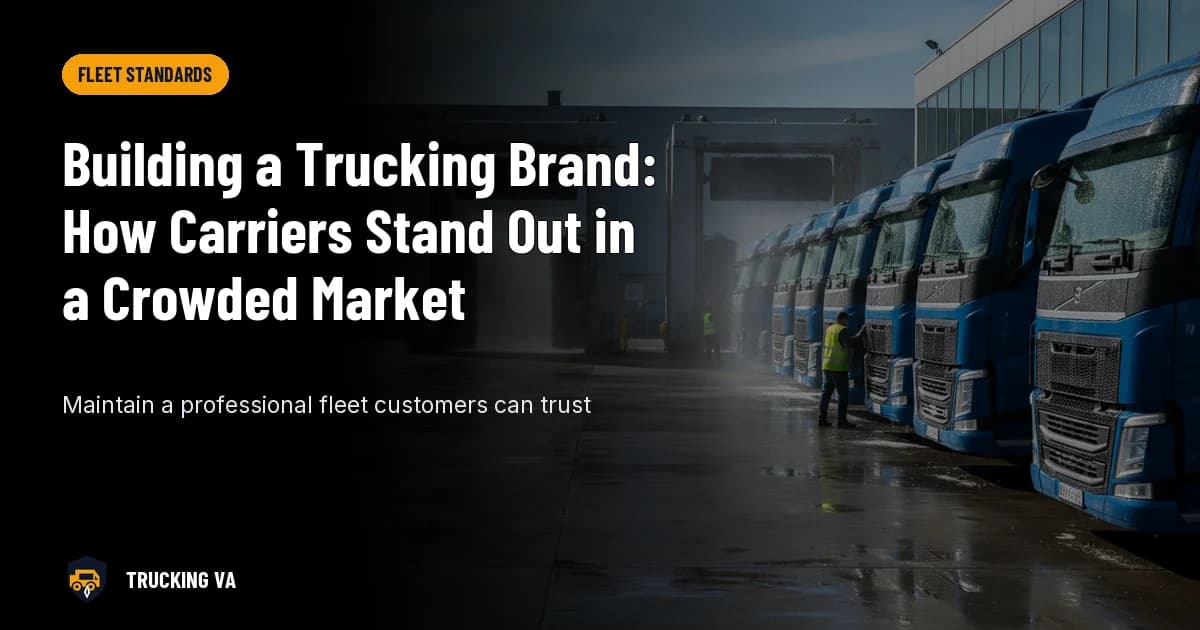
- Equipment Appearance - Truck and trailer appearance is the most visible brand expression in trucking; clean, well-maintained, consistently branded equipment signals operational quality to customers and drivers.
- Driver Behavior as Brand - Every interaction a driver has with a shipper, receiver, or member of the public is a brand moment; driver training on professional behavior is brand investment.
- Digital Presence - A professional website, active LinkedIn presence, and consistent Google Business profile are the minimum digital brand requirements for carriers pursuing business development with larger shippers and freight forwarders.
- Safety as Brand - A clean safety record communicated proactively is one of the most powerful brand differentiators in trucking; carriers who lead their sales conversations with safety data and certifications occupy a distinctive brand position.
- Customer Communication Standards - Proactive communication with customers about load status, delays, and operational updates is a brand behavior that consistently differentiates professional carriers from transactional ones.
- Consistency Across Touchpoints - Brand strength is undermined by inconsistency; the company that presents beautifully in a sales meeting but delivers poorly on the first load fails to build the brand the sales presentation promised.
Step-by-Step Approach
Building a trucking brand requires defining your identity, establishing your visual presence, and then systematically delivering the service and communication standards that make the brand real rather than aspirational.
-
Define your brand positioning by answering three questions clearly: What do you do exceptionally well that matters to your target customers? Who specifically are your target customers, and what do they value most in a carrier relationship? What would you want customers, drivers, and industry colleagues to say about your company if asked?
-
Audit your current brand touchpoints by reviewing your equipment appearance, website, social media presence, email communications, and any customer-facing materials against the positioning you defined in step one. Identify where the current reality supports your positioning and where it undermines it.
-
Develop your visual brand identity if you do not already have one, including a professional logo, consistent truck and trailer paint scheme, and branded communications templates. Your visual identity should be distinctive, appropriate to your freight specialization, and consistent across all applications.
-
Write a one-paragraph carrier profile that communicates your positioning clearly in the language that resonates with your target customers. This paragraph becomes the basis for your website home page, your LinkedIn company description, and the opening of your sales conversations.
-
Establish your operational service standards as brand commitments, including on-time performance targets, communication response time standards, and equipment cleanliness standards. These operational commitments are the behavior that your brand is ultimately built on.
-
Build your digital presence starting with a professional website that describes your services, certifications, equipment capabilities, and the specific customer types you serve. A simple, professional, accurate website is significantly better than no website or a poorly maintained one.
-
Create a customer communication protocol that specifies how proactively you communicate with customers about their loads, including pre-pickup confirmation, en route status updates, and delivery confirmation. This communication protocol is a brand differentiator that most carriers do not maintain consistently.
-
Develop your employer brand materials including a career page on your website, social media content that shows your culture and equipment, and a driver testimonial program that shares authentic driver experiences with prospective recruits.
Common Mistakes to Avoid
The most common trucking brand mistake is investing in logo and truck graphics without developing the operational standards that give the brand content. A visually distinctive brand that delivers inconsistent service creates cognitive dissonance that actually makes the service inconsistency more memorable rather than less.
Trying to brand for too broad an audience rather than a specific target customer type is a second mistake that produces messaging so general it fails to resonate with anyone. A brand that claims to do everything for everyone is a brand that is distinctive to no one.
Neglecting the employer brand while focusing exclusively on customer-facing brand development is a third mistake that undermines the driver recruitment and retention outcomes that operational brand excellence requires. Driver quality is a brand building input; carriers who invest in customer brand without employer brand cannot deliver the service quality that customer brand requires.
- Presenting a premium brand in sales and marketing materials while allowing equipment appearance, facility cleanliness, and employee presentation to contradict that positioning in daily operations
- Failing to claim and actively manage your Google Business profile, which appears in local search results for your company name and presents whatever information the algorithm populates rather than the information you want prospective customers to see
- Not measuring brand impact through metrics such as customer retention rate, direct inbound inquiry volume, referral rate, and driver applicant quality over time, making it impossible to demonstrate that brand investment is generating measurable business results
Numbers to Know
- Carriers with established brand reputations among their target shipper base report customer retention rates of 75 to 90 percent annually, compared to 50 to 65 percent for carriers without deliberate brand positioning
- Driver applicant quality as measured by experience level and safety record improves measurably at carriers with strong employer brands; recruiters report receiving 30 to 50 percent more experienced driver applications than before employer brand development
- Shippers report that brand reputation and known service track record are primary selection criteria in dedicated carrier relationships, ranking above price in more than 60 percent of surveys among large shipper logistics managers
- Carriers who invest consistently in brand building over three to five years report premium rate achievement of 8 to 15 percent above spot market comparables on their dedicated and preferred customer freight relationships
Next Steps
Building a trucking brand is a multi-year commitment that pays returns through better customer relationships, stronger driver recruitment, and premium pricing that compound as the brand reputation grows in your target market. The most important first step is the positioning definition that gives your brand investment a clear direction.
Define your positioning clearly before spending any money on visual identity or marketing execution. A well-defined positioning makes every subsequent brand investment more effective; an undefined positioning makes even substantial marketing spend ineffective.
Our resource on Trucking Niche Market Strategies covers the freight specialization decisions that give brands their most distinctive and defensible positioning in the trucking market.
Ready to build a trucking brand that supports premium pricing and driver recruitment? Visit our contact page to speak with a trucking marketing specialist who can help you define your brand positioning and develop the carrier materials that communicate it effectively.