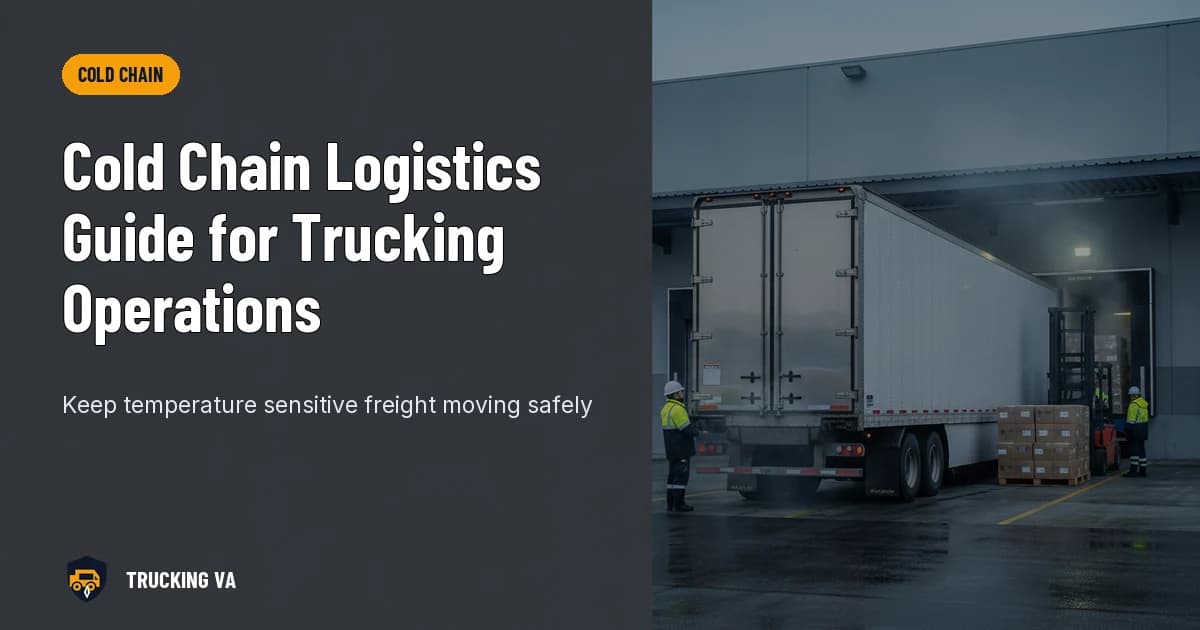
Understanding Cold Chain Logistics
The Bureau of Labor Statistics projects continued growth in demand for refrigerated transportation as the U.S. food and pharmaceutical sectors expand, and FMCSA regulations establish specific requirements for carriers transporting food under the Sanitary Food Transportation Act that apply to every reefer operation regardless of fleet size. Cold chain logistics refers to the end-to-end management of temperature-controlled freight from pickup through final delivery, encompassing the equipment, processes, documentation, and monitoring systems required to keep perishable goods within their required temperature range throughout the entire transit.
A break anywhere in the cold chain, whether at the shipper's loading dock, during transit, or at the consignee's receiving facility, can render an entire load unsellable. The consequences include product rejection, financial loss, regulatory penalties, and damage to the carrier's reputation with shippers who depend on temperature integrity.
Cold chain freight covers a wide range of commodities that require different temperature ranges. Fresh produce typically ships between 34 and 40 degrees Fahrenheit, frozen foods require negative 10 degrees or below, and pharmaceuticals often require precise narrow temperature bands between 36 and 46 degrees that leave no room for deviation.
Carriers entering the cold chain market must invest in proper equipment, driver training, temperature monitoring technology, and documentation systems before they can reliably serve this freight segment. The margin for error is extremely low, and shippers have little patience for carriers who cannot demonstrate consistent temperature performance.
The regulatory landscape for cold chain transportation has grown more demanding over the past decade. The FDA Food Safety Modernization Act and the Sanitary Food Transportation Rule impose specific requirements on carriers transporting human and animal food that go beyond basic FMCSA compliance obligations.
Understanding reefer-specific operations is the foundation of cold chain logistics, and our Reefer Trucking Operations Guide provides a detailed look at the equipment, loading, and transit procedures that underpin every successful cold chain move.
Why Cold Chain Logistics Matters
Temperature-sensitive freight commands premium rates compared to dry van loads because the operational complexity and liability exposure are significantly higher. Carriers who build the capability to serve cold chain shippers access a high-value freight segment with strong lane density and repeat volume.
The cost of cold chain failures is asymmetric. A single load of rejected pharmaceuticals or spoiled produce can cost more than an entire month's profit from that shipper relationship. Carriers who invest in prevention through quality equipment and rigorous monitoring protect margins while building the reliability record that earns more dedicated freight.
- Premium Revenue - reefer loads typically generate 15 to 30 percent higher revenue per mile compared to equivalent dry van freight because of the specialized equipment and management requirements
- Shipper Loyalty - cold chain shippers prioritize reliability over price because the cost of a temperature failure far exceeds any savings from a cheaper carrier, creating strong loyalty toward carriers with proven track records
- Market Differentiation - cold chain capability is a genuine barrier to entry that limits competition on temperature-sensitive lanes, giving qualified carriers pricing power that general commodity carriers cannot command
- Regulatory Alignment - carriers who meet FDA and USDA requirements for food transportation are pre-qualified for a large segment of the grocery, foodservice, and pharmaceutical shipping markets
Key Considerations for Cold Chain Logistics
- Pre-Cool Requirements - reefer units must be pre-cooled to the required temperature before loading begins; placing product into a warm trailer that is still cycling down to set-point temperature is one of the most common causes of load rejection at delivery
- Temperature Monitoring and Documentation - continuous temperature recorders or data loggers must be used on every load, and records must be retained and available to shippers and regulatory authorities; many shippers require wireless telematics that provide real-time temperature visibility during transit
- FDA Sanitary Transportation Compliance - carriers transporting human food must ensure that vehicles and equipment are sanitary, that temperature controls are capable of maintaining required conditions, and that drivers are trained on food safety practices under the Sanitary Food Transportation Rule
- Reefer Fuel and Maintenance - the refrigeration unit runs on its own fuel supply separate from the truck engine, and running out of reefer fuel in transit is a catastrophic failure that is entirely preventable with proper pre-trip checks and fueling protocols
- Product Compatibility - some commodities produce ethylene gas, require ventilation, or emit odors that can affect co-loaded products; carriers must understand commodity compatibility requirements before loading mixed freight in a single trailer
Step-by-Step Approach
Running a reliable cold chain operation requires systematic processes at every stage from booking to delivery. Ad hoc cold chain management produces inconsistent temperature performance and leads to claims and shipper attrition over time.
Carriers who document their cold chain procedures and enforce them consistently across all drivers and dispatchers build the kind of operational credibility that translates into preferred carrier status with major shippers and brokers.
- Verify Temperature Requirements Before Accepting Load - confirm the required temperature range, any pre-cool requirements, and monitoring specifications with the shipper before dispatching a driver
- Inspect and Pre-Cool the Reefer Unit - run a full pre-trip inspection on the refrigeration unit, check reefer fuel level, verify there are no air leaks at doors or walls, and start the unit early enough to reach set-point temperature before loading begins
- Confirm Temperature at Loading - document the trailer temperature at the start of loading and record the product temperature using a calibrated thermometer; both readings should appear on the bill of lading or temperature log
- Program the Reefer Unit Correctly - set the unit to the correct set-point, configure continuous run mode rather than cycle-sentry mode for sensitive commodities, and verify that the unit is operating correctly before the driver departs
- Monitor Temperature in Transit - use a telematics or data logger system that records temperature at regular intervals throughout the trip; drivers should check temperature readouts at every fuel stop and report any deviations immediately
- Respond to Temperature Alerts Immediately - establish a clear protocol for what drivers should do if the temperature drifts outside the acceptable range, including who to contact, where to seek equipment repair, and how to document the event
- Document Temperature at Delivery - record the final temperature reading before the trailer is opened and have the consignee acknowledge the reading on the delivery receipt to establish the temperature history at handoff
- Retain All Temperature Records - store temperature logs, delivery receipts, and maintenance records for each load for a minimum of 12 months and make them accessible for shipper audits or regulatory inspections
Common Mistakes to Avoid
Cold chain failures in carrier operations are almost always the result of preventable procedural lapses rather than equipment failures. The most expensive temperature excursions happen when drivers or dispatch teams skip steps that they view as optional.
Building accountability into the process through checklists, supervisor sign-offs, and real-time monitoring eliminates the majority of these mistakes before they cause a load failure.
- Loading product into a trailer that has not reached the required set-point temperature before loading begins
- Failing to check reefer fuel levels during pre-trip inspection, leading to fuel exhaustion and temperature excursion during transit
- Omitting temperature documentation at pickup and delivery, leaving the carrier without evidence to defend against shipper temperature claims
- Using cycle-sentry mode instead of continuous run mode for commodities that require steady temperature maintenance throughout transit
Numbers to Know
Cold chain logistics benchmarks help carriers set realistic equipment, fuel, and compliance investment expectations. Understanding these figures also helps shippers evaluate whether a carrier's proposed rate adequately covers the operational cost of temperature-controlled service.
These numbers reflect industry standards and regulatory requirements that apply across the cold chain freight segment. Carriers who operate below these standards are taking on significant financial and regulatory risk.
- 34 degrees F to 40 degrees F - standard temperature range for fresh produce and chilled grocery products, representing the largest volume segment of temperature-controlled freight
- -10 degrees F or below - required trailer temperature for frozen food products, which demands higher-capacity refrigeration equipment and higher reefer fuel consumption
- 15% to 30% - typical rate premium that reefer freight commands over comparable dry van loads on the same lane due to equipment and compliance costs
- 2 degrees F - typical temperature tolerance window for pharmaceutical cold chain shipments, representing the narrowest acceptable range in commercial cold chain logistics
Next Steps
Building a cold chain logistics operation that consistently delivers temperature integrity requires investment in the right equipment, the right training, and the right documentation systems. Carriers who treat cold chain as a premium service discipline rather than just another freight type build a sustainable competitive advantage.
The maintenance demands of reefer equipment are more complex and time-sensitive than standard dry van equipment, and proactive scheduling is essential. Our Fleet Maintenance Scheduling guide covers the preventive maintenance frameworks that keep temperature-control equipment reliable through high-mileage cycles.
If your operation is building or expanding cold chain capabilities and needs support with compliance documentation, driver training administration, or shipper onboarding, the Trucking VA team is ready to help you build the infrastructure for reliable, profitable temperature-controlled operations. Contact us today to learn how we can support your cold chain growth.