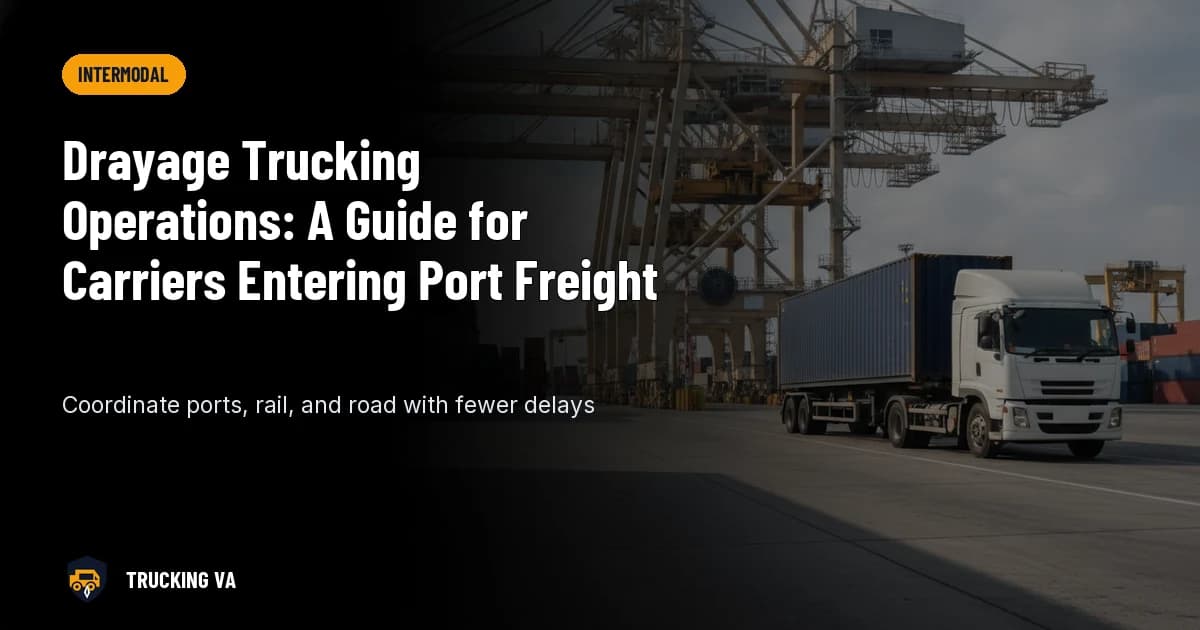
Understanding Drayage Trucking Operations
Drayage trucking operations involve the short-distance movement of shipping containers and trailers between ports, rail yards, warehouses, and distribution centers using specialized equipment configurations that connect marine and rail freight with inland trucking networks. The term "drayage" historically referred to any short-haul freight movement, but in modern logistics it primarily describes the first and last mile of intermodal freight involving ocean shipping containers.
The drayage segment operates under conditions and requirements that distinguish it significantly from over-the-road trucking. Drayage drivers work within port operating hours, navigate congested port environments with strict safety and security protocols, manage chassis availability that is independent of their tractors, and deal with detention structures that reflect port appointment systems rather than standard shipping hours.
Container handling at ports requires drayage drivers to manage the physical complexity of moving intermodal containers on chassis provided by chassis pools that are often managed by the ports or third-party providers. The driver uses their own tractor to pull a rented chassis to the port, picks up a loaded container, and delivers it to the designated consignee location. The return movement brings an empty container back to the port or an import container to a chassis depot.
The Transportation Worker Identification Credential (TWIC) is a security requirement for drayage drivers who need access to secure areas of maritime ports and facilities. TWIC cards are issued by the Transportation Security Administration after a background check and must be carried by drivers at all times while working in port environments. Carriers entering drayage must ensure their drivers are TWIC-cleared before beginning port operations.
The complexity of drayage operations, including port appointment systems, chassis availability, port congestion, and regulatory requirements specific to port environments, creates the barriers to entry that make drayage a more defensible and often higher-margin freight segment than general commodity trucking.
Why Drayage Trucking Operations Matter
Revenue opportunity in drayage reflects the complexity premium that port operations command over standard truckload freight. Drayage rates per mile are typically significantly higher than over-the-road rates because the operations are more complex, the assets required are specialized, and the operational expertise needed to navigate port environments efficiently is not universally available.
Freight volume at major U.S. ports represents an enormous and growing market driven by the sustained growth of ocean-borne imports and exports. Ports such as Los Angeles, Long Beach, New York, Savannah, and Houston move millions of container units annually, and all of that freight requires drayage at both ends of the ocean voyage.
The concentration of freight volume near major ports also creates density advantages for drayage carriers operating in port-adjacent markets. A drayage carrier operating near a major port can complete multiple turns per day, each generating revenue, without the long non-productive highway miles that characterize over-the-road operations.
Customer relationships in drayage tend to be stable and volume-driven because freight forwarders, BCOs (Beneficial Cargo Owners), and customs brokers who need consistent drayage capacity develop ongoing relationships with reliable drayage carriers rather than sourcing each container movement through a spot process.
The intermodal freight market that drayage connects to is also growing as shippers increasingly combine ocean, rail, and truck transportation to optimize transit time and cost. Carriers positioned as reliable drayage providers are well-situated to benefit from continued intermodal growth.
Our guide on Intermodal Freight Transportation Guide covers the full intermodal freight ecosystem that drayage operations connect to and serve.
Key Considerations for Drayage Trucking Operations
- TWIC Requirement - Ensure all drivers who will access secure port areas have current TWIC cards before dispatching them to port assignments; a driver without a TWIC card cannot enter many port gate facilities.
- Chassis Management - Understand the chassis pool arrangements at your target ports, including whether chassis rental fees are included in the drayage rate or billed separately to the consignee.
- Port Appointment Systems - Most major ports use appointment systems that require trucks to schedule gate entries in advance; understand the appointment booking process and cancellation policies for your target ports.
- Per Diem and Demurrage - Container per diem accrues when containers remain at the port beyond their free time; demurrage accrues when containers remain on chassis beyond chassis free time; understand these cost structures and communicate them to customers.
- Pre-Pull Operations - Some drayage operations require pulling containers from the port before delivery appointments are confirmed; pre-pull incurs additional chassis costs and storage fees that must be factored into pricing.
- Scale Compliance - Drayage containers frequently approach or exceed legal weight limits; carriers must have weight tickets from the port and scale compliance knowledge for the specific routes they operate.
- Port-Specific Regulations - Many ports have specific requirements for truck age, emissions standards, and safety equipment that must be met before operating in the port environment.
Step-by-Step Approach
Entering drayage trucking requires researching port-specific requirements, acquiring appropriate equipment, qualifying drivers, and building customer relationships in the port freight community.
-
Research the specific requirements of the ports you intend to serve, including equipment age requirements, emissions standards, chassis pool arrangements, appointment system processes, and any port-specific safety or security protocols. Requirements vary significantly between ports and must be understood before committing equipment.
-
Assess your tractor equipment against port requirements. Many major ports, particularly in California under CARB regulations, impose strict diesel engine vintage requirements that may require equipment investment before accessing the port market.
-
Initiate the TWIC card application process for all drivers who will work in port environments. The application process includes a background check and takes several weeks; plan for this timeline before targeting a specific port operations start date.
-
Develop relationships with chassis providers and understand the chassis rental fee structure at your target ports. Chassis availability has been a significant operational challenge at several major ports, and understanding how chassis is sourced and priced is fundamental to accurate drayage pricing.
-
Identify your initial customer targets in the drayage market. Freight forwarders, customs brokers, non-vessel operating common carriers (NVOCCs), and large importers with regular container volumes at your target ports are the most productive customer development targets.
-
Build your understanding of the per diem and demurrage structures at your target ports. Communicating these costs clearly to customers and building them accurately into your operational processes prevents surprise cost exposure from containers that remain at the port or on chassis longer than the free time allows.
-
Establish your port appointment management process using the specific appointment system at your target port. Appointment management for drayage is a critical operational function because missed appointments waste driver time, incur fees in some systems, and damage customer relationships.
-
Track your operational performance metrics specific to drayage, including turns per day, chassis utilization, demurrage and per diem costs incurred versus recovered, and revenue per mile. These metrics reflect the operational efficiency dimensions most critical to drayage profitability.
Common Mistakes to Avoid
The most common drayage entry mistake is underestimating the port-specific learning curve. Ports have idiosyncratic processes, appointment systems, gate procedures, and driver expectations that take time to learn. Carriers who approach their first port operations without adequate preparation experience operational disruptions that damage the customer relationships they built to enter the market.
Failing to account for chassis costs and per diem risk in drayage pricing is a second mistake that erodes margins quickly. These costs can be substantial and are only manageable when they are explicitly accounted for in the rate structure and monitored actively during operations.
Not verifying TWIC card status before dispatching drivers to port assignments is a third mistake that results in drivers being turned away at port gates, creating service failures for customers and productivity losses for the carrier. TWIC card expiration monitoring should be part of the driver compliance tracking system.
- Attempting to enter drayage at ports with strict emissions regulations without verifying that your equipment meets those regulations, resulting in equipment being denied port access
- Not building per diem and demurrage cost communication into customer agreements, then absorbing costs that customers would have managed differently had they been informed at booking
- Ignoring port congestion patterns when scheduling daily operations, resulting in excessive wait times at port gates that reduce turns per day and profitability
Numbers to Know
- Major U.S. ports process more than 25 million twenty-foot equivalent units (TEUs) annually, with Los Angeles and Long Beach alone handling approximately 18 million TEUs combined, representing an enormous drayage freight market
- Drayage rates in high-volume port markets typically range from $200 to $600 per container move depending on distance, port, and market conditions, with per-mile economics significantly exceeding over-the-road rates
- TWIC card applications require a background check and processing time of three to five weeks under normal conditions; plan this timeline into any port drayage market entry strategy
- Container per diem at major U.S. ports typically accrues at $75 to $200 per day after the free time expires, making container move speed a direct financial priority; carriers who complete moves within free time avoid per diem costs that significantly impact load profitability
Next Steps
Drayage trucking operations offer carriers access to a high-value freight segment with significant volume, growing demand from intermodal freight growth, and rate premiums that reflect the operational complexity of port environments. The barriers to entry are real but manageable for carriers who approach the market with adequate preparation.
Begin with thorough research on the specific requirements of your target port and an assessment of your equipment against those requirements. Understanding the entry conditions precisely prevents the most costly operational surprises.
Our resource on How to Get Freight Contracts covers the customer development strategies that apply to drayage freight forwarder and importer relationships alongside the broader contract freight market.
Ready to evaluate drayage trucking for your operation? Visit our contact page to speak with a freight operations specialist who can help you assess the requirements and opportunity at your target port.